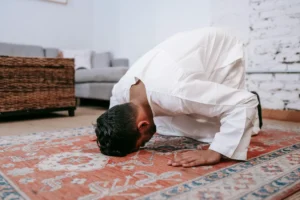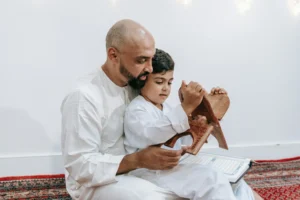
In Islam, fatherhood is more than a role—it is an amanah, a sacred trust from Allah.
Many fathers work tirelessly to provide food, shelter, education, and security for their
families. These efforts are noble and rewarded. Yet one of the greatest gifts a father
can offer his children is not found in his wallet or career, but in his presence.
The Prophet Muhammad ﷺ was a model of presence. Despite carrying the
immense responsibility of leading a community, he made time for his family. He
listened, smiled, showed affection, and gave people his full attention. His example
teaches us that true leadership begins at home.
Being present means more than simply being physically nearby. A father can sit in
the same room as his children while his mind remains occupied elsewhere.
Presence means listening when a child speaks, noticing their worries, celebrating
their small victories, and guiding them through their mistakes. It is about making
family members feel seen, valued, and loved.
Spiritually, a father’s presence leaves a lasting imprint. Children often learn their
understanding of faith not merely through lessons, but through observation. They
notice whether their father prays with sincerity, speaks with kindness, keeps his
promises, and remembers Allah in times of ease and hardship. A father’s daily
actions often become a child’s earliest and most powerful Islamic education.
Allah says:
“O you who believe, protect yourselves and your families from a Fire whose fuel is
people and stones.” (Qur’an 66:6)
Protection is not limited to physical safety. It includes nurturing hearts, cultivating
faith, and helping family members develop a relationship with their Creator. This
requires time, patience, and meaningful engagement.
In today’s world, distractions are abundant. Phones, work demands, social media,
and endless responsibilities compete for attention. Yet children rarely remember
every gift they received. They remember conversations, shared prayers, walks
together, words of encouragement, and moments when their father chose them over
distractions.
A spiritually present father does not need to be perfect. Islam does not demand
perfection; it encourages sincerity and continuous growth. Children benefit greatly
from seeing a father who admits mistakes, seeks forgiveness from Allah, and strives
to improve. Such humility teaches them that faith is a journey of constant return to
their Lord.
One of the most powerful acts a father can perform is making dua for his children.
The supplications of parents carry special significance. Alongside dua, fathers
should create moments of worship with their families—praying together, reading
Qur’an, discussing Allah’s blessings, and reflecting on His mercy. These simple
practices strengthen family bonds while nurturing spiritual growth.
Years pass quickly. Careers change, possessions fade, and achievements are
eventually forgotten. But the impact of a present and God-conscious father can echo
through generations. A child who experiences love, guidance, and faith at home is
more likely to carry those values forward and pass them to their own children.
The measure of fatherhood in Islam is not solely what a father provides, but who he
becomes in the lives of those entrusted to him. A present father offers his children
something priceless: a living example of faith, character, and devotion to Allah.
And perhaps one day, when his children raise their hands in prayer and ask Allah to
have mercy on their father, the reward of his presence will continue long after he has
left this world.