As parents, we often spend considerable time thinking about what we should teach
our children. We teach them how to pray, how to speak respectfully, how to behave
with others, and how to distinguish right from wrong. Yet one of the most powerful
lessons our children will ever receive is not taught through our words, but through
our example.
Long before children understand lectures, they observe behaviour. They watch how
their parents react when frustrated, how they speak to one another, how they treat
neighbours, how they spend their time, and how they respond to Allah’s commands.
In many ways, parents become the first living interpretation of Islam that a child
encounters.
The Qur’an repeatedly emphasizes the importance of integrity between words and
actions. Allah says:
“O you who believe! Why do you say what you do not do? It is most hateful in the
sight of Allah that you say what you do not do.” (Qur’an 61:2–3)
While this verse addresses all believers, it carries a particularly powerful message
for parents. Children quickly recognize inconsistency. When they hear values that
are not reflected in daily behaviour, the lesson often loses its impact. Conversely,
when they see sincerity and consistency, those values become deeply rooted in their
hearts.
The Prophet Muhammad ﷺ was the greatest example of this principle. His
companions did not simply listen to his teachings; they witnessed them. They saw
his honesty, patience, humility, mercy, generosity, and devotion to Allah in everyday
life. His character gave credibility to his message.
Allah describes him as:
“Indeed, in the Messenger of Allah you have an excellent example for whoever
hopes in Allah and the Last Day.” (Qur’an 33:21)
Every parent, in a smaller but significant way, serves as an example within their own
home. Whether we realize it or not, our children are learning from us every day.
In today’s world, this responsibility has become even more important. Children are
surrounded by countless influences. Social media personalities, celebrities, online
creators, peers, and digital communities all compete for their attention and
admiration. In such an environment, parents cannot assume that their values will
automatically be passed down. Positive influence must be intentional.
One of the most effective ways to remain a meaningful influence is to cultivate
authenticity. Children, especially teenagers, are highly sensitive to hypocrisy. They
may not expect perfection, but they do appreciate honesty. A parent who
acknowledges mistakes, seeks forgiveness, and strives to improve often teaches a
more powerful lesson than one who tries to appear flawless.
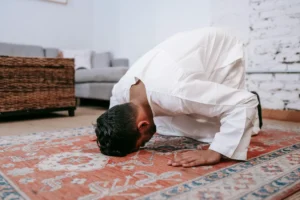
For example, when children see their parents prioritizing prayer despite busy
schedules, they learn the importance of worship. When they observe kindness
during disagreements, they learn emotional maturity. When they witness generosity,
patience, gratitude, and trust in Allah during difficult times, they learn how faith
operates in real life.
Role modelling extends beyond religious practices. It shapes how children
understand relationships. The way parents treat one another becomes their first
lesson in marriage, communication, and respect. A home filled with mercy,
cooperation, and mutual appreciation teaches children what healthy relationships
look like.
The Prophet ﷺ was known for his kindness within his household. He helped his
family, showed affection, listened attentively, and treated people with dignity. These
examples remind us that Islamic character is not only demonstrated in public acts of
worship but also in everyday family interactions.
Modern parenting research supports this timeless Islamic wisdom. Studies
consistently show that children are more likely to adopt behaviours they observe
than instructions they hear. In other words, our actions often speak louder than our
advice.
This reality should encourage parents to focus not only on correcting their children
but also on developing themselves. Before asking whether our children are reading
Qur’an, we can ask whether they see us reading it. Before expecting honesty from
them, we can examine our own honesty. Before demanding respect, we can reflect
on how respectfully we speak to others.
This does not mean becoming overwhelmed by the responsibility. Rather, it means
recognizing that personal growth is part of parenting. Every effort to improve our
relationship with Allah, strengthen our character, and refine our behaviour benefits
not only us but also our children.
Another important aspect of role modelling is demonstrating balance. Today’s society
often glorifies busyness, constant entertainment, and digital distraction. Children
need to see adults who can manage technology responsibly, prioritize family
relationships, engage in meaningful conversations, and make time for worship and
reflection.
When parents consistently choose presence over distraction, gratitude over
complaint, and faith over fear, they communicate powerful values without saying a
word.
Perhaps one of the most beautiful aspects of being a role model is that influence
often extends far beyond childhood. Years later, children may forget specific lectures
or rules, but they frequently remember examples. They remember seeing their father
make dua after prayer. They remember their mother’s patience during hardship.
They remember honesty, kindness, forgiveness, and trust in Allah lived out before
their eyes.
These memories become part of their identity. They shape how they approach
marriage, parenting, work, friendships, and faith. In this way, a parent’s example can
continue influencing future generations.
The goal of Islamic parenting is not to create an image of perfection. It is to provide
children with a sincere example of what it means to strive for Allah’s pleasure.
Children do not need perfect parents. They need parents who are genuinely trying to
live the values they teach.
In a world filled with competing voices and influences, the most persuasive message
parents can offer is a life that reflects the beauty of Islam. When children see faith
embodied in character, worship reflected in behaviour, and love for Allah
demonstrated through daily actions, they receive a lesson that no book, lecture, or
screen can fully replace.
May Allah make us parents whose words and actions align, whose homes reflect the
mercy of Islam, and whose example becomes a source of guidance and blessing for
generations to come.